
Working Smarter by Reimagining the Rest between Pomodoro Sessions
Building a restorative break menu that energizes you

Several years ago, I asked one of my mentors for advice on navigating the final stages of graduate school. Once classes were over, the structure disappeared, and I found myself in a ‘choose-your-own-adventure’ phase. I was working on my dissertation at my own pace, on my own timeline.
It was difficult to find a rhythm that felt sustainable. Without the built-in deadlines and external accountability of coursework, I often felt I was working too much or not enough. My mentor’s advice was simple but powerful: Work smarter, not harder.
At the time, I wasn’t entirely sure what that meant in practice. But after plenty of trial and error, I’ve finally figured out what it looks like. The key? Managing my energy, not just my time.
For years, I treated breaks between deep work tasks as opportunities to catch my breath before starting work again. I’d grab a coffee, check emails, or scroll social media. But I noticed something: I was quite drained by the end of the day. My work breaks weren’t restoring my energy. They were filling time until I started the clock on the next work session.
I saw a real difference when I started making my breaks more intentional and restorative. Doing this makes me more satisfied with how I spend my days. I no longer feel like I am compromising my well-being to make progress on my dissertation.
Rethinking the Pomodoro Break
You may be familiar with the Pomodoro Technique, which alternates deep focus sessions with structured breaks. Focusing on a task for 25 or 50 minutes, followed by a 5- or 10-minute break, has been shown to improve focus and prevent burnout.
I’ve used Pomodoro timers for years, but until recently, I wasn’t strategic about how I spent my breaks. Instead of mindless scrolling or rushing through small tasks, I decided to experiment with restorative micro-activities during my breaks.
My Restorative Break Toolkit
It’s been 3 months now, and I’m still refining my approach, but here’s what my break options include so far:
Standing mobility workout at my desk (My favorites are by Julia Reppel)
Watching a few minutes of a stand-up comedy set (Josh Johnson is on my list atm)
Breathwork exercises to reset my nervous system (you might enjoy this one from Bright + Salted Yoga)
Guided visualization or meditation for mental clarity (I find Meet your Radiant Self by Shivarasa illuminating)
I keep the links to these activities easily accessible in my Notes app. When it’s time for a break, I can scan the list and choose one that feels right in the moment.
The result? Less exhaustion at the end of the day and a deeper sense of peace because I maintained my mind-body connection. Instead of pushing through my brain’s natural need for rest, I’m working with my energy cycles, helping me work smarter instead of harder.
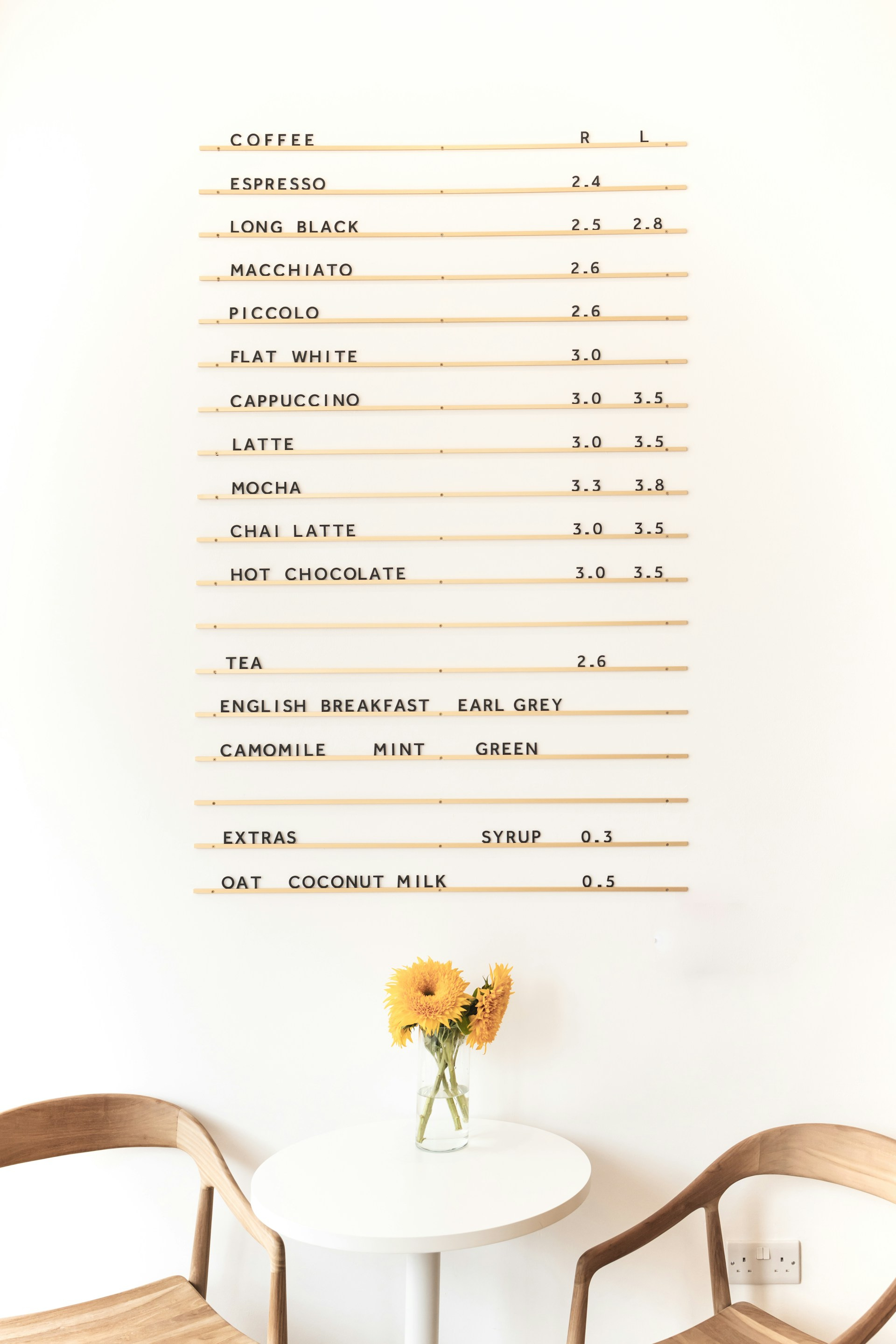
How to Build Your Restorative Break Menu
If you’d like to try this approach, here’s how to get started:
Create a quick-access list in your Notes app or another easily accessible location.
Categorize your break activities based on what restores you. You might use:
The 5 senses (sight, sound, touch, taste, smell)
The 4 happy hormones (dopamine, oxytocin, serotonin, endorphins)
Indoor vs. outdoor activities
Identify 1-2 activities per category and add them to your list.
Use your list during breaks—scan and select an activity that feels right in the moment.
Track how you feel over the next two weeks.
Refine your list based on what works best to sustain your energy.
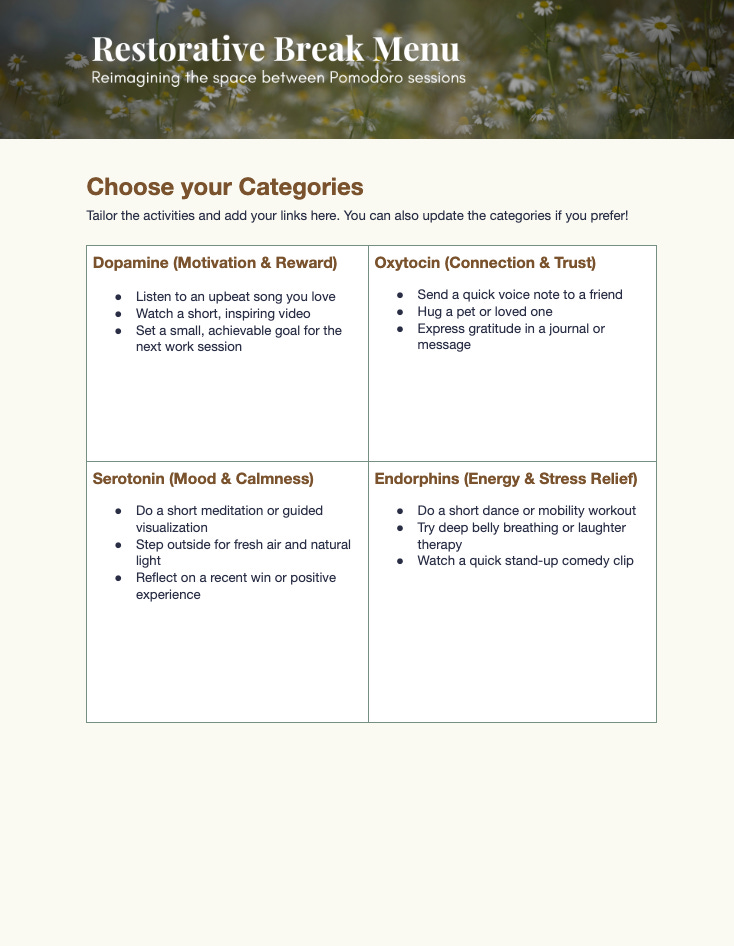
Example: Restorative Breaks Based on the 4 Happy Hormones
Here’s how you could structure your break options using hormone-based energy restoration:
Dopamine (Motivation & Reward)
Listen to an upbeat song you love
Watch a short, inspiring video
Set a small, achievable goal for the next work session
Oxytocin (Connection & Trust)
Send a quick voice note to a friend
Hug a pet or loved one
Express gratitude in a journal or message
Serotonin (Mood & Calmness)
Do a short meditation or guided visualization
Step outside for fresh air and natural light
Reflect on a recent win or positive experience
Endorphins (Energy & Stress Relief)
Do a short dance or mobility workout
Try deep belly breathing or laughter therapy
Watch a quick stand-up comedy clip
By structuring your breaks around what your brain and body need, you’re not just “resting”, you’re recharging strategically.
Final Thought: Work Smarter, Not Harder
Instead of treating breaks as an afterthought, what if they became a tool for energy management? When we align our work with our natural rhythms, we don’t just prevent burnout—we create a sustainable, satisfying way to thrive.
Try this experiment for the next two weeks and see how your energy shifts. You might be surprised at how small, intentional breaks can make a big impact.
Download the Menu Template
If you’d like a template for tracking your energy experiment, you can download mine here.
Work with Rose Data Studio
If your team is exploring ways to do impactful data work without burning out, my workshops are designed with you in mind. I center technical skill-building and the wellbeing practices that help people increase their data confidence and thrive for the long haul. Explore our workshops and see what might support your next season of growth.